Bedding Guide
Naturepedic and Healthy Choice: How Their Wool Bedding Layers Differ
A wool topper can change the character of a mattress without replacing it. Naturepedic and Healthy Choice both use wool and cotton to add cushioning and encourage a breathable sleep surface, but their documented constructions, stated dimensions, and care guidance are not identical. The differences are less a matter of one being universally better than the other than of deciding what kind of layer suits your mattress, habits, and expectations.
Published October 24, 2026
A topper is a small intervention with a noticeable effect
A mattress is often treated as a finished object: chosen, delivered, and expected to remain agreeable for years. In practice, the surface can feel too firm, too warm, or simply less inviting than it did at first. A mattress topper offers a way to adjust that surface while leaving the underlying mattress in place. It is not a cure for a badly worn or structurally unsupportive mattress, but it can add a measure of cushioning and alter the way the bed feels against the body.
Wool toppers occupy a particular middle ground. They are not the dense, springy layer associated with latex, nor the deeply sinking softness often associated with thick foam. Wool batting offers a softer, more yielding layer, while the fiber’s ability to manage moisture and insulate makes it attractive to people seeking a bed that feels comfortable across changing temperatures. Cotton, used for the cover or casing, provides a fabric layer around the fill.
The names Naturepedic and Healthy Choice can therefore be considered within a shared category, but the category itself is broad. Wool may be arranged in multiple batting layers, quilted or otherwise held in place, and enclosed in cotton fabric of different kinds. Thickness matters, as do the details of the construction and the instructions for care. Those details can help a shopper form a clearer expectation than a general promise of natural comfort.
The Naturepedic Wooly: a three-inch wool layer
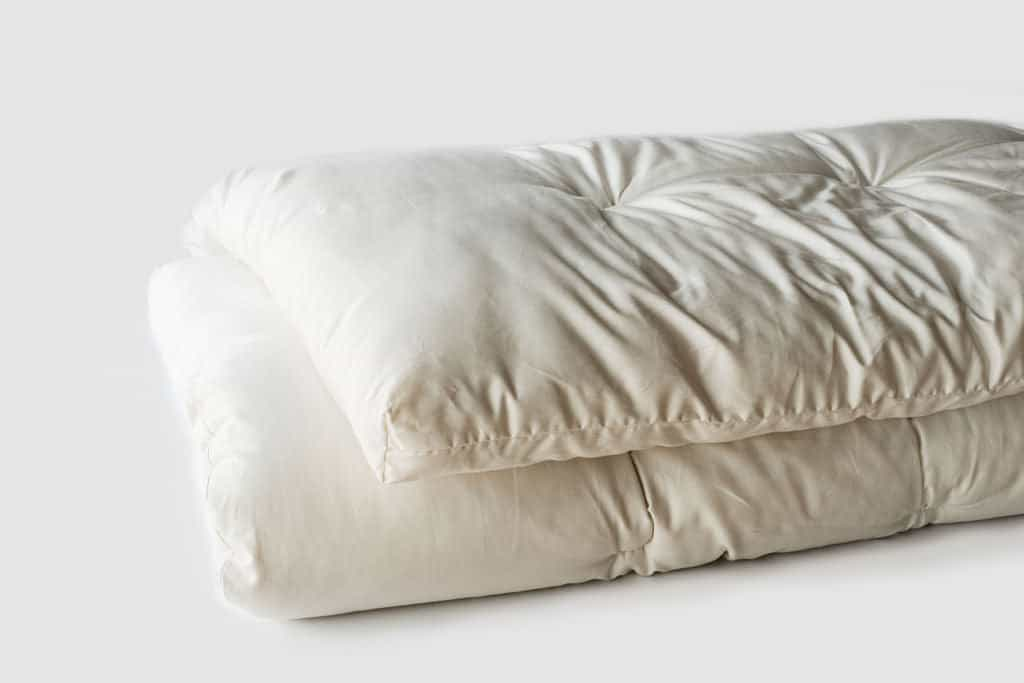
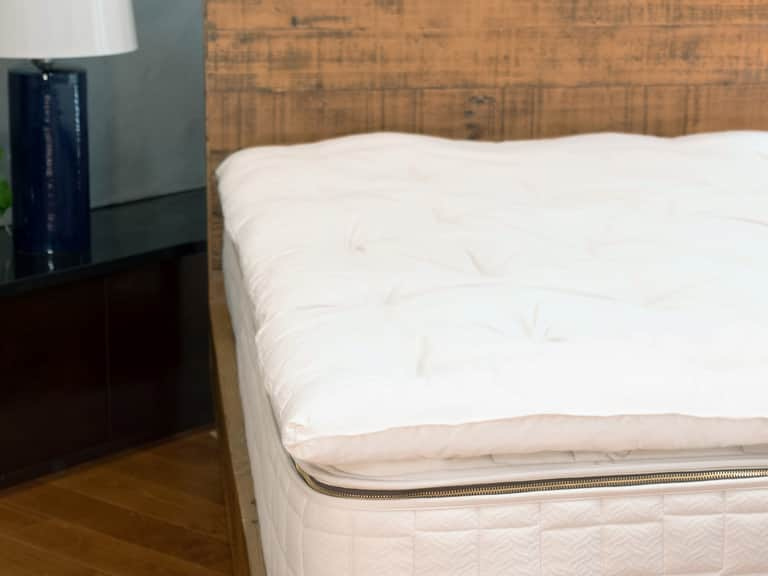
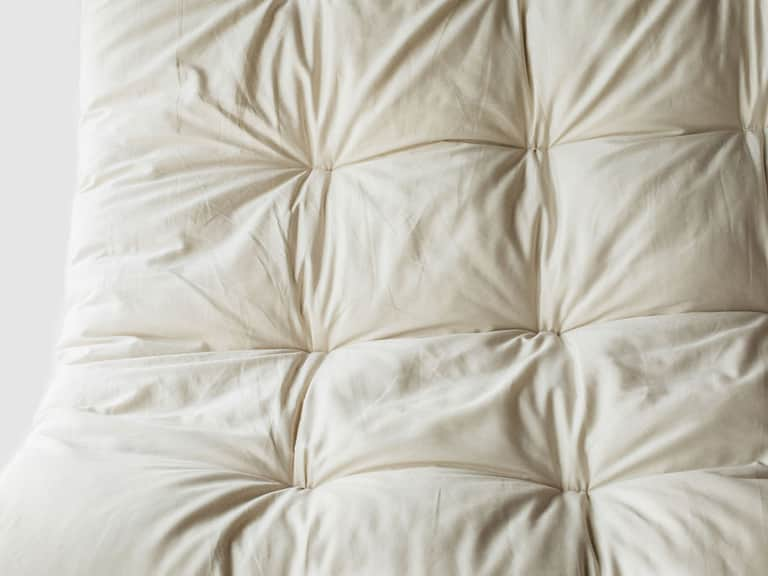
The Naturepedic Wooly Mattress Topper is described as a three-inch topper made with GOTS-certified organic wool batting and finished in breathable organic cotton sateen. Its stated construction emphasizes thick wool layers intended to add softness and cushioning. The product description presents it as an option for people who want to soften a mattress or move toward the plush feel of a pillow-top bed.
Its stated dimensions are three inches, a useful point of reference when considering how much the topper may change the bed’s profile. A layer of that height can make a mattress feel more cushioned, though a listed measurement should not be mistaken for a guarantee of identical loft at every point after use. Wool is a natural fiber, and its feel can compress with body weight and regular use. The topper’s actual effect will also depend on the mattress beneath it: a firm, even surface may respond differently from one that is already soft or uneven.
Naturepedic describes the Wooly as offering full-body support and pressure-point relief, with wool’s moisture-wicking and temperature-regulating properties contributing to comfort. These are product claims about the intended experience, not a promise that every sleeper will feel the same result. Body shape, sleeping position, bedroom temperature, bedding layers, and personal preference all influence whether a particular wool topper feels sufficiently soft or too lofty.
The maker’s listed care guidance is spot cleaning only. It also recommends a protective pad to reduce the risk of liquids reaching the topper or mattress, and suggests turning and rotating the topper regularly, two to four times a year. That advice matters in daily life: wool batting is not a layer to treat like a washable sheet. A protector can make routine maintenance simpler, while occasional rotation can help distribute wear.
The Healthy Choice organic wool option: wool between cotton layers
The Healthy Choice organic wool mattress topper is described as approximately three inches thick, with GOTS-certified organic wool nestled between two layers of GOTS-certified organic cotton fabric. It is presented as handcrafted, with the materials arranged to create a cushioned layer that lies flat on the mattress. In contrast to a description centered on a sateen cover and wool batting layers, this account draws attention to the cotton layers surrounding the wool and to the handcrafted construction.
That difference in description is worth noticing, but it should not be overread. Both products use wool with cotton, and both are reported at about three inches thick. The available product information does not establish a controlled, side-by-side test of loft, softness, compression, or warmth. Nor does it give enough detail to claim that one construction will necessarily feel firmer, cooler, or more supportive than the other. Construction language helps frame the comparison; it does not replace hands-on experience.
Healthy Choice’s materials description places emphasis on the wool and cotton themselves, with the wool positioned between cotton fabric layers. For shoppers who are attentive to the composition of bedding, the stated certifications offer a way to understand how the materials are represented. Certification is a useful point of comparison, but it is not a substitute for checking the exact product label, current specifications, and any details that matter to an individual household.
Care guidance should be checked for the particular Healthy Choice model before purchase. The information provided describes careful maintenance rather than routine machine washing; spot cleaning is the relevant approach for the wool topper. Because wool-filled bedding can be damaged by excess water or unsuitable handling, follow the current manufacturer instructions rather than assuming that a cotton exterior means the complete topper can be laundered. A mattress protector may help limit spills and perspiration from reaching the wool.
At a glance: what the descriptions establish
| Consideration | Naturepedic Wooly | Healthy Choice organic wool topper |
|---|---|---|
| Main fill | GOTS-certified organic wool batting | GOTS-certified organic wool |
| Cotton component | Breathable organic cotton sateen cover | GOTS-certified organic cotton layers surrounding the wool |
| Reported thickness | 3 inches | Approximately 3 inches |
| Construction emphasis | Wool batting layers within a cotton sateen finish | Wool positioned between two cotton fabric layers; described as handcrafted |
| Care considerations | Spot clean only; use a protector and rotate regularly | Check model-specific directions; careful spot cleaning is appropriate |
This comparison is deliberately limited to details stated in the available descriptions. It does not treat “organic,” “natural,” or “three inches” as shorthand for identical performance. A shopper seeking a precise answer about the fill weight, quilting pattern, expected compression, or exact cleaning process should consult the current product information for the specific model before ordering.
Thickness is a clue, not a complete forecast
Both toppers are described at roughly three inches, which gives them more presence than a thin mattress pad. The number may suggest a substantial change in surface feel, but thickness alone cannot tell you how the bed will behave. A loft measurement does not reveal the weight of the wool, its density, how it is distributed, or how much it will settle with use. Two products can share a nominal depth and still have different tactile qualities.
It helps to begin with the mattress already in the room. If it is sound but feels a little too firm, a wool layer may soften the first impression and provide additional cushioning. If the mattress has a pronounced dip, a topper is unlikely to restore its underlying support. Adding a thick layer to an uneven mattress can disguise some surface discomfort temporarily, but it cannot correct a compromised support system.
Bed height is another practical matter. A three-inch topper can affect the fit of fitted sheets, the ease of getting into bed, and the visual proportion of the mattress. Measure the mattress and existing bedding together, and check that the fitted sheet has sufficient pocket depth to cover the mattress and topper without pulling loose. If the bed is shared, consider whether both sleepers want the added softness; wool may change the sensation at the surface without resolving differences in firmness preference.
Temperature and moisture: useful qualities, not climate control
Wool is often chosen for its ability to manage moisture and provide insulation. Those properties help explain why wool bedding can feel appealing in a range of seasons: it can add warmth while also helping move humidity away from the sleeping surface. Cotton contributes a breathable textile layer. Together, these materials offer a different proposition from a synthetic foam topper, although the experience still depends on the whole bed and bedroom.
It is useful to keep the claim proportionate. A wool topper does not regulate room temperature, and it cannot guarantee that a person who sleeps hot will feel cool. The warmth of a bed depends on the mattress, sheets, duvet, sleepwear, room conditions, and individual physiology. Someone who already uses heavy blankets may need to adjust the rest of the bedding after adding a lofty wool layer. Conversely, a person who finds a mattress surface cool or uninviting may appreciate the added insulation.
For shoppers comparing the two, temperature preferences may be less decisive than the construction and care details. Both products rely on wool and cotton, so the broad material rationale is similar. The choice may turn on the exact cover, how the layers are assembled, and which product’s written specifications and care requirements feel more compatible with everyday use.
Care is part of the purchase
Wool bedding has a particular relationship with water. Its appeal does not make it carefree, and a topper this thick should not be assumed to fit into a household washing machine. The Naturepedic Wooly is specified as spot-clean only. For the Healthy Choice option, consult its current care label and product instructions; the described construction likewise calls for considered care rather than casual laundering.
A protector is a practical first line of defense. It can help keep spills, perspiration, and everyday soil from reaching the topper, provided it is compatible with the bed and does not create an unwanted change in feel. A protector is not an excuse to ignore care directions, but it can reduce how often the wool layer needs attention. If an accident occurs, act according to the product’s instructions and avoid soaking the material. Allow cleaned areas to dry completely before remaking the bed.
Rotation can help reduce uneven wear, especially when one area of the bed receives more use. Naturepedic recommends turning and rotating the Wooly two to four times a year. For the Healthy Choice topper, follow the maker’s current guidance rather than importing another product’s schedule. These small routines are easy to postpone; they are also easier than trying to remedy a persistent compressed area after it has formed.
Care plans should take account of the household, not just the materials. Families with young children, pets, or a greater likelihood of spills may place a higher value on a substantial washable layer—but these wool toppers should not be treated as fully washable unless the specific instructions explicitly say so. In such a home, a well-fitting protector and a clear spot-cleaning plan are especially useful.
How to choose between them
Start with the details that are most consequential in your own bedroom. If a three-inch wool layer is the intended change, both options appear to occupy that general range, but confirm the dimensions and specifications for the exact size and model. Then compare the product’s construction description, fabric finish, warranty, and care instructions as currently published. The particulars may matter more than a broad label such as “organic wool.”
- Choose by the surface you want. Think about whether the mattress needs gentle cushioning or a more substantial plush layer. A topper modifies feel; it does not replace appropriate mattress support.
- Check the full bed height. Account for the mattress, topper, protector, and fitted sheet. Confirm that sheets can accommodate the added depth.
- Read the care instructions before purchase. Spot cleaning and protection are part of owning wool bedding. Make sure the routine is realistic for your household.
- Consider the cover and assembly. Naturepedic identifies an organic cotton sateen cover and wool batting layers; Healthy Choice describes wool between two layers of organic cotton. Decide which stated construction is more appealing, without assuming unverified performance differences.
- Check current certifications and terms. Confirm the certification language, sizes, availability, and warranty for the specific product you are considering.
- Think about protection. A compatible mattress protector can help keep the topper clean and reduce the need for spot treatment.
For a shopper drawn to a clearly specified three-inch product with an organic cotton sateen finish and explicit spot-cleaning and rotation advice, the Naturepedic Wooly’s published description offers those points in a straightforward form. Someone focused on the construction of wool between two layers of organic cotton may find the Healthy Choice description more closely aligned with that preference. Neither distinction should be treated as a verdict on comfort before the product is used.
Questions worth asking before ordering
Product pages can answer the broad questions while leaving practical ones unresolved. Before choosing, verify the exact size, current availability, shipping and return terms, warranty coverage, and the manufacturer’s latest care instructions. If you are especially sensitive to heat, pressure, or material feel, look for detailed construction information rather than relying on a general description of softness or support.
It is also reasonable to ask how the stated thickness is measured and whether it refers to the topper before or after settling. If the mattress is an unusual size, check compatibility rather than assuming that a close dimension will fit neatly. For a shared bed, consider how the topper will interact with each sleeper’s preferred position and existing mattress firmness. These questions are not fussy. They are the ordinary mechanics of buying a layer intended to remain under the sheets night after night.
Finally, distinguish product facts from expectations. Organic certification describes a defined standard and scope; it does not by itself establish that a topper will relieve every pressure point or suit every temperature preference. A natural fiber can be a thoughtful material choice, but comfort remains personal. Clear specifications and realistic expectations make the comparison more useful.
The bottom line
Naturepedic and Healthy Choice share the central ingredients of this comparison: wool and cotton arranged as a layer over a mattress, with a stated thickness of about three inches and an emphasis on breathable, natural materials. The Naturepedic Wooly is described with GOTS-certified organic wool batting and an organic cotton sateen cover. The Healthy Choice option is described as GOTS-certified wool between two layers of GOTS-certified organic cotton, with handcrafted construction.
The practical distinction lies in how each product is specified and cared for, not in a proven universal difference in sleep quality. Naturepedic provides explicit spot-clean-only guidance and recommends regular rotation and a protective pad. With Healthy Choice, confirm the care directions for the exact model and plan to protect the wool from spills. In either case, consider the existing mattress, desired cushioning, fitted-sheet depth, and the amount of maintenance you are prepared to undertake.
A wool topper is a modest piece of bedding with an outsized job: to make the surface beneath the sleeper feel more accommodating. The most considered choice is the one whose materials, construction, care requirements, and proportions make sense in the particular bed—not simply the one with the most persuasive promise of softness.